

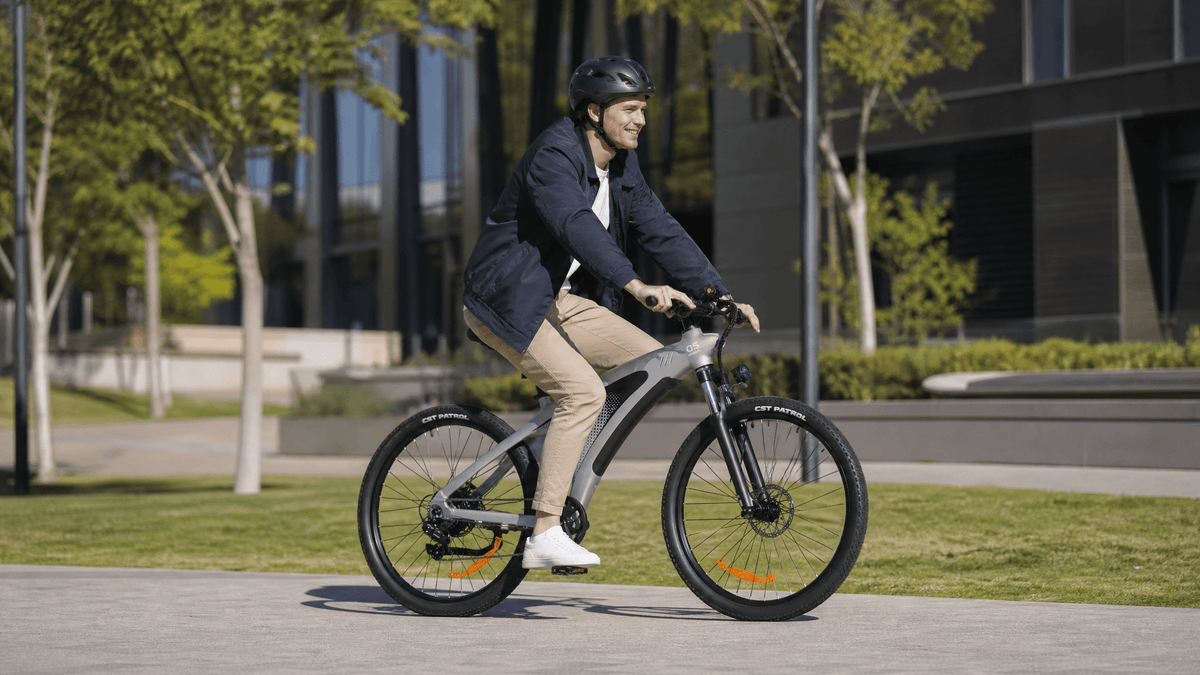
Electric bikes are becoming an increasingly familiar sight across the UK. From weekday commuters and weekend explorers to riders looking for an easier alternative to short car journeys, more people are discovering that an e-bike can make everyday travel simpler and more enjoyable.
But what is driving the shift?
The answer goes beyond electric assistance alone. Rising transport costs, busy urban roads, challenging hills and a growing interest in more flexible ways to travel are all changing how people think about getting around.
1. E-Bikes Make Everyday Cycling More Accessible
One of the biggest barriers to cycling is effort.
A route that looks manageable on a map can feel very different when it includes steep hills, strong headwinds or a long ride home after a full day at work. Electric assistance helps reduce these barriers while still allowing the rider to pedal.
For many people, this changes the question from:
“Can I cycle there?”
to:
“Why wouldn’t I?”
E-bikes can make longer journeys feel more achievable and help riders tackle hills with greater confidence. This is particularly useful in hilly UK cities and towns, where terrain can quickly turn a short commute into a demanding ride.
Cycling UK also highlights the ability of e-cycles to make hills and headwinds easier while helping bridge the gap between journeys that are too far to walk and trips that might otherwise require a car or public transport.
2. Commuting Without Arriving Exhausted
Traditional cycling can be an excellent way to commute, but not everyone wants to arrive at work hot and tired.
An electric bike allows riders to adjust the level of assistance depending on the journey. More support can be used for hills, headwinds or the morning commute, while lower assistance can provide a more active ride when conditions are easier.
This flexibility is one of the main reasons e-bikes work so well for everyday transport.
For UK commuters, an electric bike can offer:
-
Less effort on hills and longer routes
-
A more consistent journey
-
Reduced dependence on a car for shorter trips
-
Greater flexibility than fixed public transport schedules
-
The ability to combine exercise with everyday travel
Instead of cycling being something reserved for weekends or good weather, an e-bike can become a practical part of a daily routine.
3. The Cost of Driving Is Making Alternatives More Attractive
Owning and running a car involves far more than the purchase price. Fuel, insurance, servicing, parking and other ongoing costs can add up quickly.
An electric bike still requires an initial investment and regular maintenance, but its day-to-day running costs can be significantly lower than those of a car.
For short local journeys—such as commuting, visiting friends, going to the shops or travelling to a railway station—an e-bike can provide a practical alternative without the fuel and parking costs associated with driving.
Cycling UK notes that e-bikes can be particularly attractive for replacing short car journeys, with lower running and maintenance costs than a car.
For many riders, the goal is not necessarily to replace every car journey. Replacing even some regular short trips can make an e-bike a useful addition to everyday life.
4. Electric Bikes Make Longer Rides Feel Possible
Range has improved considerably across the modern e-bike market.
Battery capacity, motor efficiency, terrain, rider weight, weather and assistance level all affect how far an electric bike can travel on one charge. However, larger batteries are making longer commutes and leisure rides increasingly practical.
This matters because range anxiety is one of the first concerns many new e-bike buyers have.
A long-range electric bike can open up more possibilities, including:
-
Longer daily commutes
-
Weekend countryside rides
-
Exploring beyond the local neighbourhood
-
Multi-purpose journeys without frequent charging
For example, long-range models with high-capacity batteries can be designed for riders who prioritise extended journeys and greater performance. The Q5 Shark Electric Bike, for instance, features a 960Wh battery and a claimed maximum range of up to 75 miles under suitable riding conditions.*
*Actual range varies depending on rider weight, terrain, temperature, speed, assistance level and other riding conditions.
5. UK Weather and Terrain Make Electric Assistance Useful
Britain may not be known for mountains everywhere, but many UK riders regularly deal with rolling terrain, steep urban streets and strong winds.
From Bristol and Sheffield to parts of Wales and Scotland, hills can be a major factor when deciding whether cycling is practical for everyday transport.
Electric assistance can make these conditions more manageable. Instead of avoiding a route because of one difficult climb, riders can use additional assistance when they need it.
This does not mean the bike does everything for you. On a pedal-assist e-bike, you still ride and pedal—but the motor can help make difficult sections of the journey less demanding.
6. E-Bikes Can Replace More Than Just Car Journeys
The appeal of an electric bike is its versatility.
A single bike can potentially be used for commuting during the week and leisure riding at the weekend. Depending on the design and accessories, riders may also use an e-bike for shopping, carrying equipment or exploring mixed terrain.
Electric cargo bikes have expanded these possibilities even further, helping some riders carry shopping, equipment and even children.
This versatility is changing how people view bicycles. An e-bike is no longer simply a recreational product—it can be a genuine form of everyday transport.
7. Riders Still Get the Benefits of Being Active
A common misconception is that riding an electric bike is “not real exercise”.
In reality, electric assistance does not necessarily remove physical activity from cycling. The rider can still pedal and choose how much assistance to use.
The key difference is flexibility.
On a difficult hill, you can increase assistance. On an easy section, you can reduce it. This can help people ride more frequently, travel further and build cycling into their routine.
For many riders, a bike that gets used regularly is more valuable than a conventional bicycle that stays in the garage because the journey feels too difficult.
8. Modern E-Bikes Are More Capable Than Ever
Electric bikes have evolved significantly.
Today’s market includes lightweight urban e-bikes, folding models, cargo bikes, electric mountain bikes and powerful all-terrain machines. Improvements in batteries, motors, frame design and riding technology have given consumers far more choice.
The result is that riders can choose a bike based on how they actually plan to use it rather than accepting a one-size-fits-all design.
Someone commuting through a city may prioritise low weight and easy handling. A rider planning longer adventures may prefer a larger battery and greater range. Others may prioritise comfort, wider tyres or the ability to handle more demanding terrain.
Choosing the right e-bike is increasingly about matching the bike to the journey.
What Are the Electric Bike Rules in the UK?
Before buying an electric bike, UK riders should understand an important distinction: not every vehicle marketed as an “e-bike” is legally treated as a conventional bicycle.
In Great Britain, an electrically assisted pedal cycle, or EAPC, must meet specific requirements. Among them, the electric motor must have a continuous rated power output of no more than 250 watts, and motor assistance must not propel the bike above 15.5 mph.
A compliant EAPC can generally be ridden like a conventional bicycle by someone aged 14 or over, without registration, vehicle tax or compulsory insurance.
If an electric bike does not meet the EAPC requirements—for example, because its continuous rated motor output exceeds 250W or it can provide motor propulsion beyond the permitted speed—it may instead be legally classified as a motorcycle or moped. Different requirements can then apply, including registration, licensing, insurance and vehicle approval.
Always check the specifications, intended use and current UK regulations before riding an electric bike on public roads or cycle infrastructure.
Is an Electric Bike Right for You?
An electric bike may be worth considering if you want to:
-
Commute without relying on a car every day
-
Make hills and longer journeys easier
-
Ride more frequently
-
Reduce the cost of some everyday journeys
-
Explore further at weekends
-
Enjoy cycling with adjustable levels of assistance
The best electric bike is not necessarily the one with the biggest motor or the longest specification list. It is the one that fits where, how and why you ride.
The Future of Everyday Travel Could Be Electric
More UK riders are discovering that an electric bike can sit somewhere between a traditional bicycle, public transport and a car.
It offers the freedom of cycling with additional assistance when the journey gets difficult. For commuters, it can make daily travel more practical. For leisure riders, it can open up longer routes. And for people who previously found conventional cycling too demanding, it can make getting back on two wheels feel achievable again.
As electric bike technology continues to develop, the reasons to consider switching are becoming increasingly difficult to ignore.
Whether your goal is a simpler commute, longer weekend adventures or simply spending more time outdoors, an electric bike could change the way you think about your next journey.
Share:
How Far Can an Electric Bike Go on One Charge? A Complete UK eBike Range Guide
E-Bike vs Train: Which Saves More Money?